EV Charger Installation in San Jose: Costs, Permits, and What to Expect
Thinking about installing a home EV charger in San Jose? Here is what it costs, what the permit process looks like, and how to choose the right charger for your home.
Why a Dedicated EV Charger Is Worth It in San Jose
San Jose has one of the highest EV adoption rates in the country. If you drive a Tesla, Rivian, Hyundai Ioniq, Ford Mustang Mach-E, or any other EV, you already know that Level 1 (120V) charging is too slow for daily driving.
A Level 2 home charger (240V, 32 to 80 amps) gives you 12 to 60 miles of range per hour, enough to fully charge most EVs overnight. That means you wake up every morning with a full battery without ever visiting a public charger.
Choosing the Right Charger
The most popular home chargers in San Jose include:
- Tesla Wall Connector (48 to 80 amps) for Tesla owners
- ChargePoint Home Flex (16 to 50 amps, J1772) for non-Tesla EVs
- JuiceBox (32 to 48 amps, J1772) with app connectivity
- Grizzl-E (16 to 40 amps) for outdoor installations
The key decision is amperage. Higher amps means faster charging but requires a larger circuit. A 48-amp charger needs a 60-amp circuit, while a 32-amp charger needs a 40-amp circuit.
The Load Calculation: Why It Matters
Before installing an EV charger, your electrician must perform a load calculation per NEC 220 to confirm your panel has enough capacity. This calculation adds up all existing loads (HVAC, water heater, dryer, range, lighting) and checks whether adding a 40, 50, or 60-amp EV circuit stays within your service capacity.
If your San Jose home has a 100-amp panel and already runs a heat pump, electric water heater, and electric range, there may not be enough capacity for a high-amperage charger. In that case, your options are:
- Install a lower-amperage charger (16 to 24 amps)
- Install a load management system that shares power between the charger and another circuit
- Upgrade your panel to 200 amps first
San Jose Permit Requirements
EV charger installations in San Jose require an electrical permit. The work must be performed by a licensed electrician (C-10 in California) and inspected by the City of San Jose Building Division.
San Jose has a relatively straightforward permit process for EV chargers. We pull the permit, perform the installation, and schedule the inspection. Most inspections are completed within a few days of installation.
What Does EV Charger Installation Cost in San Jose?
A typical Level 2 EV charger installation in San Jose costs between $800 and $2,500 including labor, materials, and permit. The range depends on:
- Distance from the panel to the charger location (longer runs mean more wire and labor)
- Wall type (drywall vs. stucco vs. brick)
- Indoor vs. outdoor installation (outdoor requires weatherproof equipment)
- Panel capacity (if you need a panel upgrade first, that is a separate cost)
- Trenching (if the charger is far from the panel and you need underground conduit)
The charger itself is typically $400 to $800, purchased separately or through us.
The Installation Process
- Load calculation and site assessment. We confirm your panel has capacity and determine the best charger location.
- Permit. We pull an electrical permit from the City of San Jose.
- Installation. We run a dedicated 240V circuit from your panel to the charger location, install the charger, and test it.
- Inspection. The city inspects and signs off.
Most installations are completed in a single day.
Indoor vs. Outdoor Installation
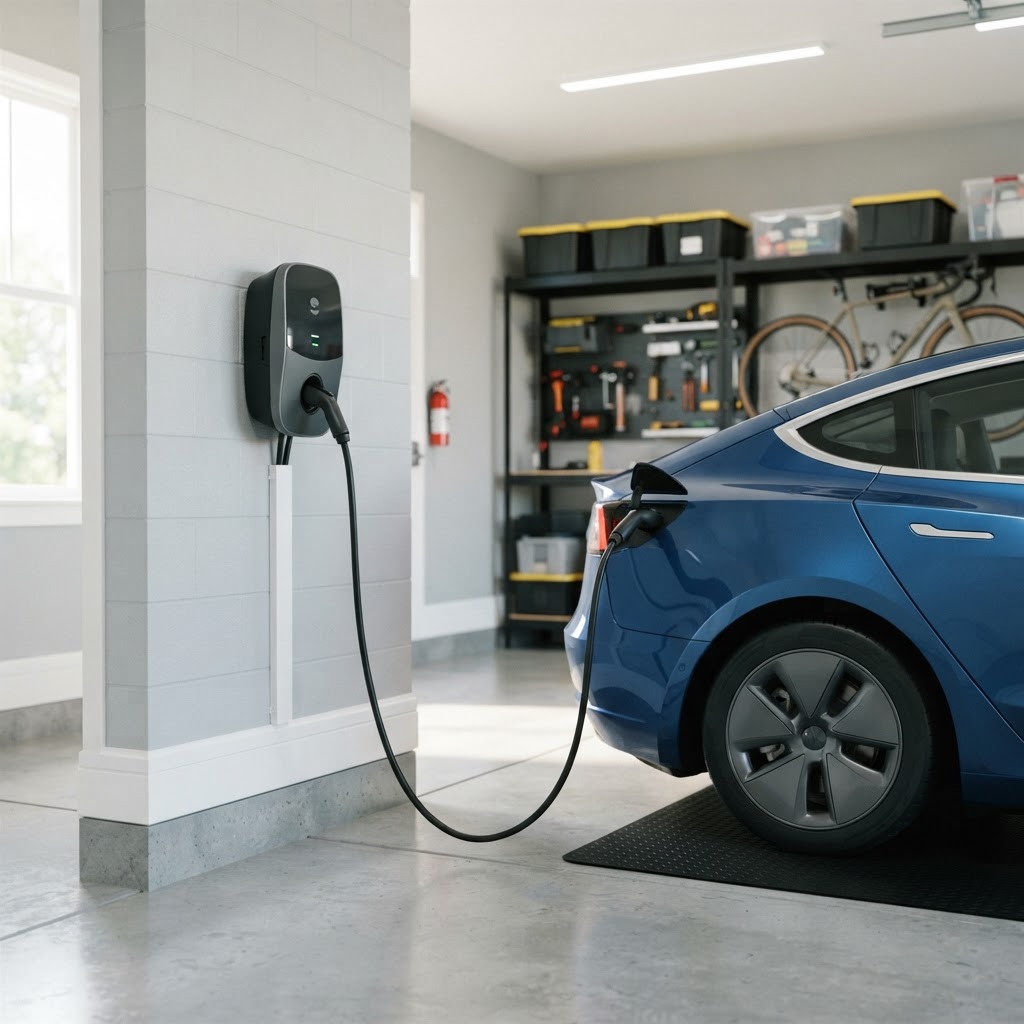
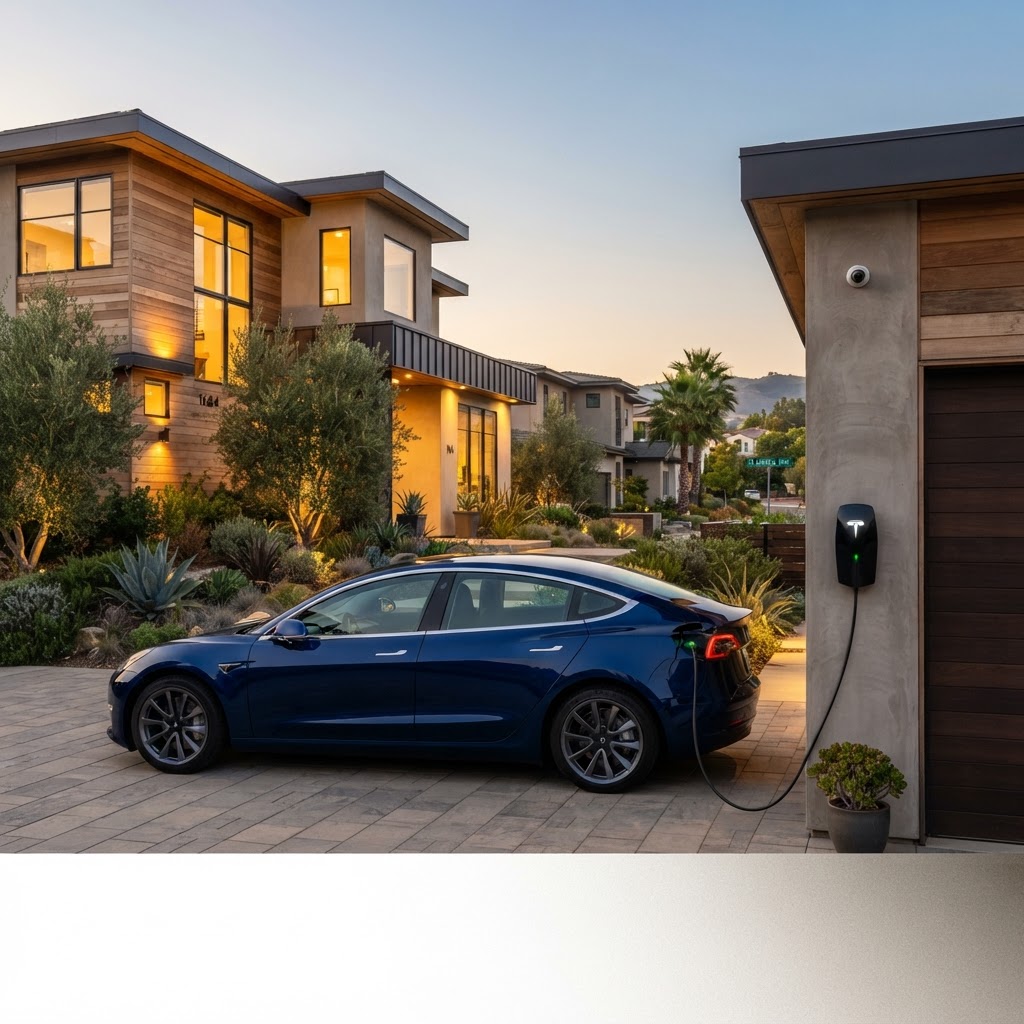
Many San Jose homes have the panel in the garage, making indoor garage installation the simplest and most common option. If you park outside or want the charger on an exterior wall, we use weatherproof equipment (NEMA 4 rated) and protect the circuit appropriately.
Do You Need a Panel Upgrade First?
If your home has a 100-amp panel and it is full or near capacity, you may need a panel upgrade to 200 amps before adding an EV charger. Signs you might need an upgrade:
- Your panel is full (no open breaker slots)
- You have a Zinsco or Federal Pacific panel (known safety issues)
- Your panel is 25+ years old
- You plan to add more electrification (heat pump, induction range, solar, second EV)
A panel upgrade adds $3,500 to $7,500 to the project but gives you headroom for future electrification.
Frequently Asked Questions
Can I install an EV charger myself?
In San Jose, electrical work requires a permit and a licensed electrician. DIY installation is not legal and will not pass inspection. More importantly, a faulty installation is a fire hazard.
Can I use a 240V dryer outlet for my EV charger?
Some EVs come with a 240V adapter, but dedicated circuits are safer and allow higher amperage. Sharing a dryer circuit means you cannot run both at once.
Does solar affect EV charger installation?
Solar and EV chargers are separate systems, but if you have solar, a panel upgrade may be needed to accommodate both the solar backfeed and the EV circuit.
Russell Electric is a licensed C-10 electrical contractor (CA License #1106773) serving San Jose and the Bay Area. Get a free quote for your EV charger installation or call (510) 303-2473.
Need an Electrician in the Bay Area?
Russell Electric is a licensed C-10 contractor serving the entire Bay Area. Free quotes, 48-hour bid turnaround for GCs.
Get a Free Quote →