Tenant Improvement Electrical: A General Contractor's Guide to Bay Area TI Projects
TI electrical is its own discipline. Here's what GCs need to know about scope, coordination, permitting, and getting fast, accurate bids from electrical subs on Bay Area tenant improvement projects.
What Is Tenant Improvement Electrical?
Tenant improvement (TI) electrical work is the electrical scope required when a commercial space is built out for a new tenant. This can range from a simple office reconfiguration to a full ground-up buildout of a restaurant, medical suite, or tech office.
Typical TI electrical scope includes:
- Lighting — LED fixtures, emergency egress lighting, exit signs, exterior lighting
- Power — receptacle circuits, dedicated equipment circuits, appliance circuits
- Low-voltage — data drops, CAT6 cabling, fire alarm devices, access control wiring
- HVAC electrical — disconnects, condenser circuits, VRF system wiring
- Service and distribution — sub-panels, branch circuits, panel schedules
- Specialty systems — kitchen hood interlocks, medical gas equipment, server room power
The Bay Area TI Market
The Bay Area has one of the most active TI markets in the country. San Francisco, Oakland, San Jose, and the Peninsula have constant demand for office buildouts, restaurant openings, retail fit-outs, and life science lab spaces. General contractors who work this market need electrical subs who can turn bids around fast, coordinate with multiple trades, and navigate local permit processes efficiently.
Common TI Electrical Scope Items
Here's a breakdown of what's typically in a TI electrical bid:
Demolition — removing existing fixtures, circuits, and conduit that won't be reused. This needs to be done early so framing and new work can proceed.
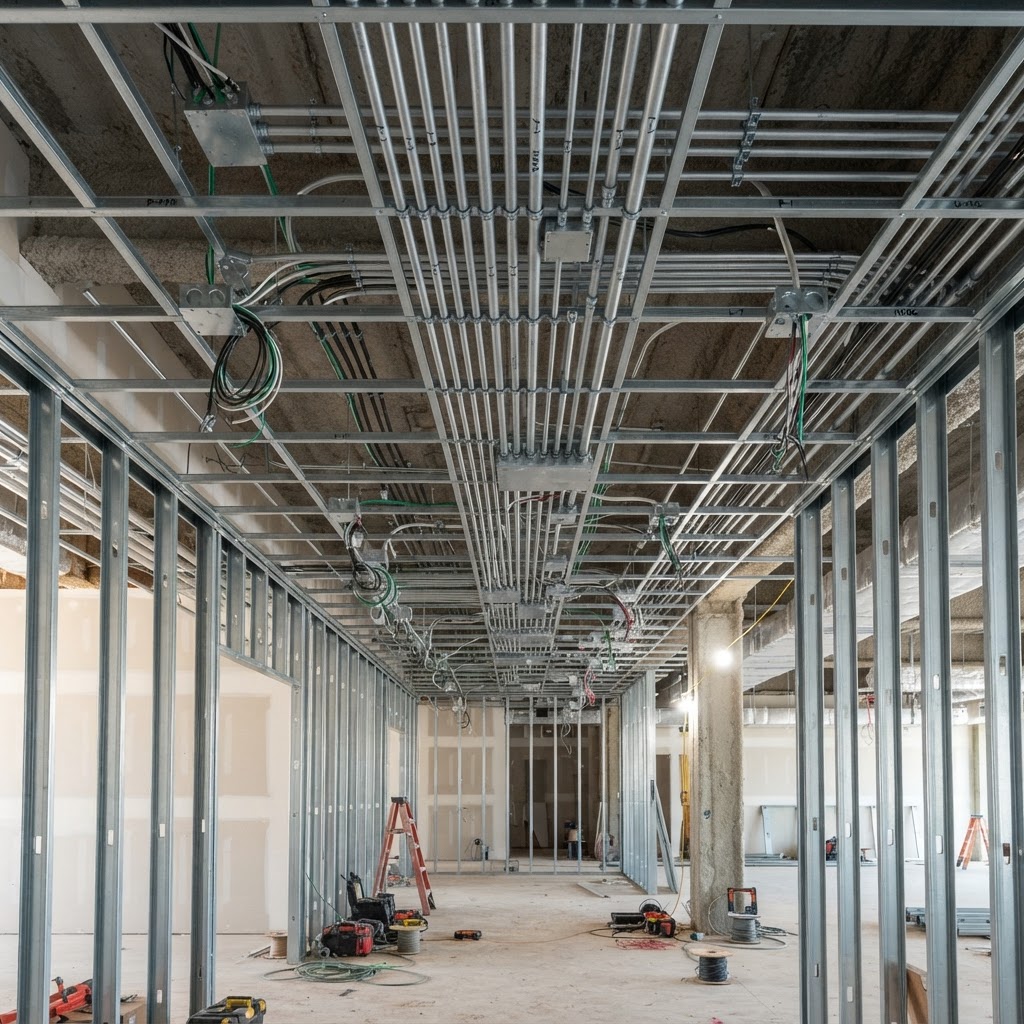
Rough-in — installing conduit, boxes, and wire before walls are closed. This is the most schedule-critical phase — if rough-in is delayed, drywall can't close.
Trim-out — installing fixtures, devices, plates, and connecting equipment after paint and finish work.
Low-voltage — data cabling, fire alarm devices, and security wiring. Some GCs use a separate low-voltage contractor; others want the electrician to handle everything.
Permit and inspection — pulling the electrical permit, scheduling rough and final inspections, and coordinating with the AHJ.
Coordination: What Makes TI Projects Work
The biggest risk on a TI project is schedule slippage caused by poor trade coordination. Here's what GCs should expect from a good electrical sub:
- Early RFI response. Electrical conflicts with HVAC ductwork, plumbing lines, and structural elements are common. The sub should flag these early, not at rough-in.
- Coordinated scheduling. Rough-in needs to happen after framing but before drywall. Trim-out needs to happen after paint. The sub should work to the GC's schedule, not the other way around.
- Clean rough-in. Boxes should be set at the right depth for the wall finish. Conduit runs should be neat and code-compliant. Sloppy rough-in creates problems at trim-out and inspection.
- Permit management. The sub should pull the permit, schedule inspections, and handle any corrections without requiring the GC to chase them.
Bay Area Permit Considerations
Each Bay Area jurisdiction has its own electrical permit process:
- San Francisco — permits through the DBI; inspections scheduled through the city's portal
- Oakland — Building Bureau handles permits and inspections
- San Jose — online permit portal; inspections scheduled electronically
- Smaller cities — each has its own process, but most accept electronic plan submittal
A sub who works the Bay Area regularly knows the inspectors, knows what they look for, and can get through the process without surprises.
How to Get a Fast, Accurate TI Bid
To get the best bid from an electrical sub on a TI project, GCs should provide:
- A complete plan set — architectural, electrical, lighting, and low-voltage plans. Partial sets lead to assumptions, which lead to change orders.
- The tenant's equipment list — especially for restaurants, medical, and lab spaces where equipment drives the electrical load.
- The project schedule — especially the target drywall date, which drives the rough-in deadline.
- The AHJ — knowing the city helps the sub anticipate permit requirements and inspection timelines.
- Existing conditions — if it's a second-generation space, photos or notes on the existing electrical infrastructure help.
With this information, a good Bay Area electrical sub can turn around a detailed, itemized bid within 48 hours.
Frequently Asked Questions
How long does TI electrical take?
For a typical 5,000–10,000 sq ft office buildout: 1–2 weeks for rough-in, 3–5 days for trim-out. Restaurants and lab spaces take longer due to specialized equipment and systems.
Do I need a separate low-voltage contractor?
Not necessarily. Many electrical subs handle data cabling, fire alarm, and access control. Consolidating reduces coordination overhead.
What's the most common TI electrical issue?
Insufficient existing service. Second-generation spaces often don't have enough panel capacity for the new tenant's loads. A good sub will flag this in the bid, not at rough-in.
Russell Electric is a licensed C-10 electrical contractor (CA License #1106773) serving Bay Area general contractors with 48-hour bid turnaround on TI and commercial projects. Submit a bid request or call (510) 303-2473.
Need an Electrician in the Bay Area?
Russell Electric is a licensed C-10 contractor serving the entire Bay Area. Free quotes, 48-hour bid turnaround for GCs.
Get a Free Quote →