Knob-and-Tube Wiring in Bay Area Homes: What Every Homeowner Needs to Know
If your Bay Area home was built before 1940, knob-and-tube wiring may be hiding behind your walls. Here's what it means for your safety, your insurance, and your next rewiring project.
What Is Knob-and-Tube Wiring?
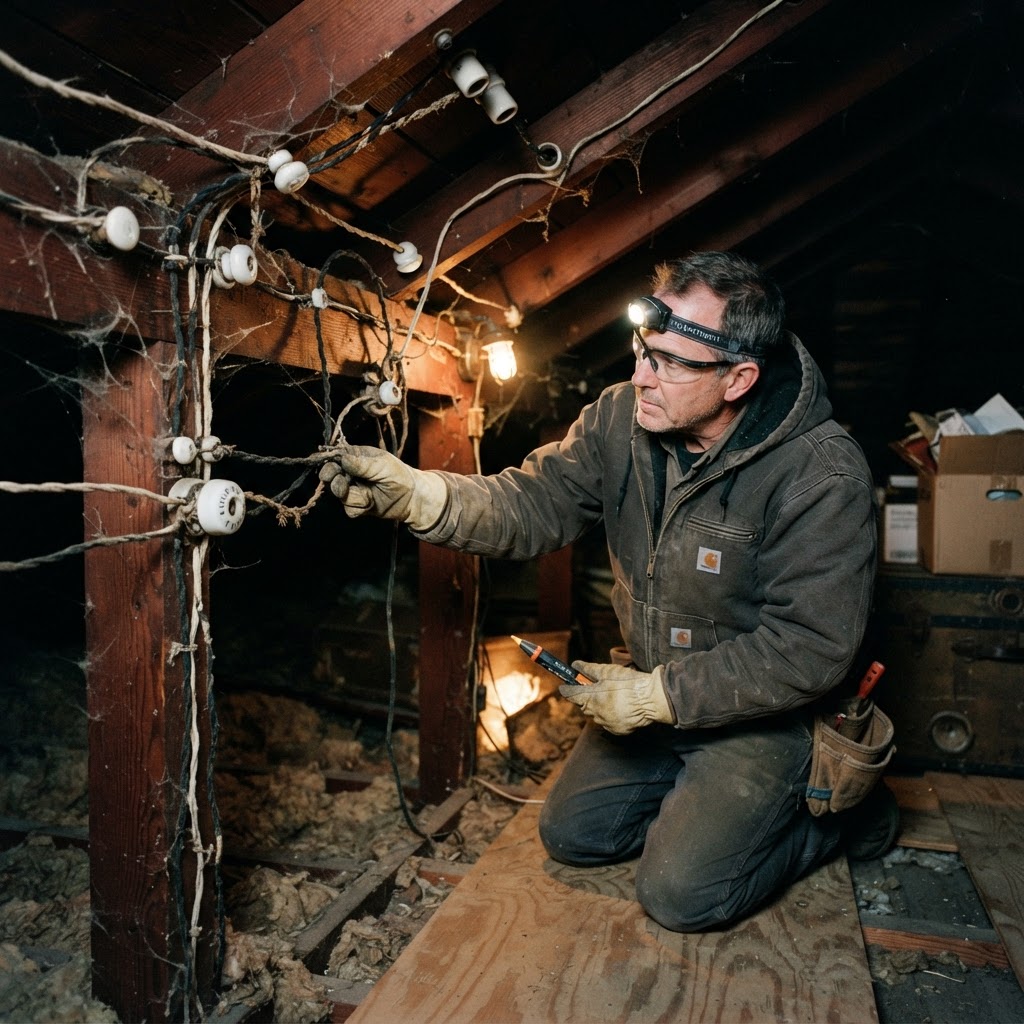
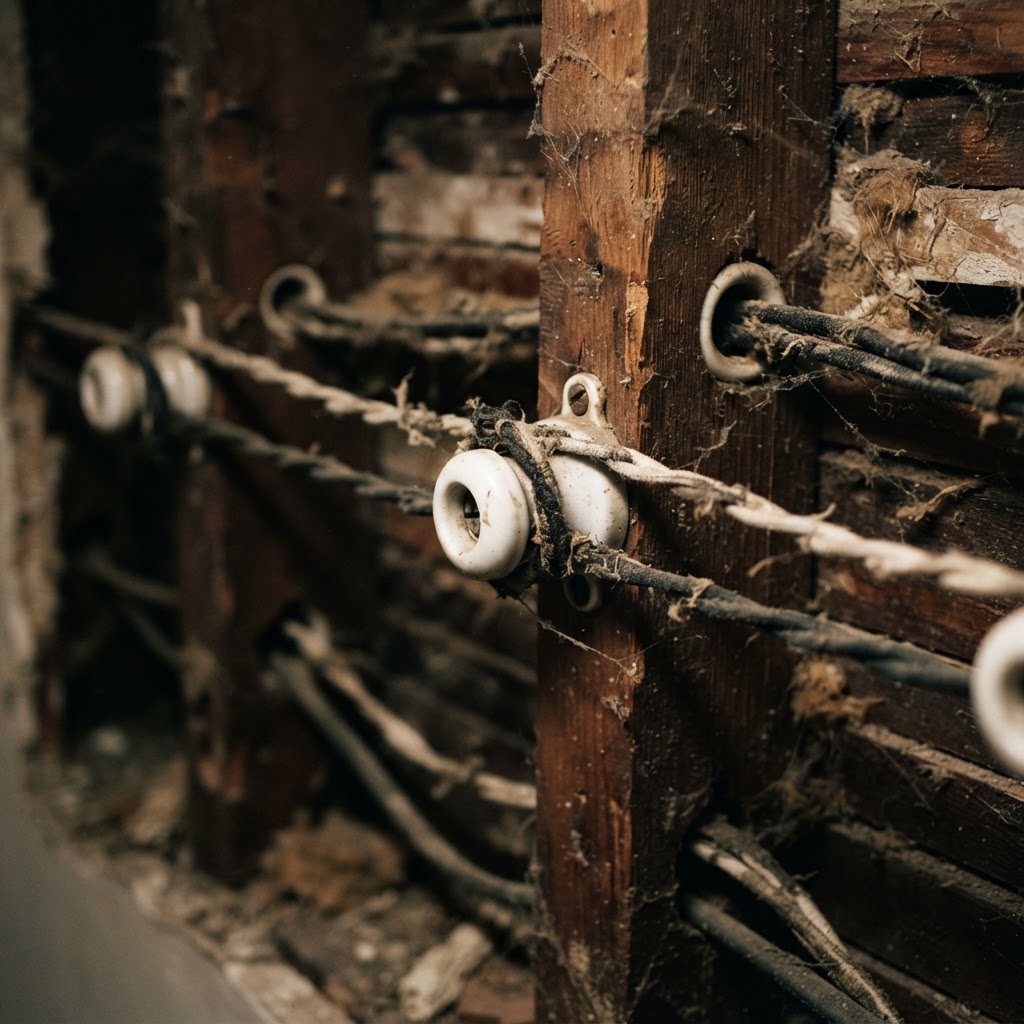
Knob-and-tube (K&T) wiring was the standard electrical wiring method used in North American homes from the 1880s through the late 1930s. It gets its name from the ceramic knobs that hold wires in place along framing members and the ceramic tubes that protect wires as they pass through wood studs and joists.
Unlike modern Romex cable, K&T wiring has no ground wire, uses rubber and cloth insulation that degrades over decades, and was designed for electrical loads far lower than what today's households demand. A single circuit might power a few lights and a radio — not an EV charger, a heat pump, and a home office.
Why Is Knob-and-Tube Wiring Dangerous?
There are three primary safety concerns with aging knob-and-tube wiring:
1. Deteriorating insulation. The rubber and cloth insulation on K&T wiring becomes brittle and flakes away over time. Exposed conductors in wall cavities and attics create a real fire risk — especially when insulation has been blown in around the wires, which traps heat and is a code violation (NEC 394.12).
2. No ground wire. K&T wiring has no equipment ground. Any appliance with a three-prong plug connected to a K&T circuit is ungrounded, which means metal-cased tools, refrigerators, and computers lack protection against fault currents. This is both a safety hazard and a code compliance issue.
3. Overloaded circuits. Original K&T circuits were often 15-amp runs that powered a few fixtures. Modern households draw far more current. When homeowners daisy-chain power strips and plug in space heaters, microwaves, and window AC units on these old circuits, the wiring overheats — and the breaker may not trip because old fuse panels were often oversized.
The Bay Area Context
San Francisco, Berkeley, Oakland, Alameda, and many other Bay Area cities have large inventories of pre-1940 homes. According to U.S. Census data, roughly 30% of San Francisco's housing stock was built before 1940 — meaning tens of thousands of Bay Area homes likely still have some knob-and-tube wiring in place.
Local building departments are familiar with K&T replacement projects. In San Francisco, a full rewire requires an electrical permit from the Department of Building Inspection (DBI). In Oakland, the Building Bureau handles permits. Most Bay Area jurisdictions require that any new wiring be installed to the current California Electrical Code, which is based on the NEC.
Insurance and Knob-and-Tube Wiring
Many insurance companies in California will not write or renew a homeowners policy if active knob-and-tube wiring is present in the home — or they'll require an inspection and a remediation plan. If you're buying an older Bay Area home, your insurance company may require a four-point inspection that flags K&T wiring. In some cases, a full or partial rewire is a condition of coverage.
If you're selling, knob-and-tube wiring is a known issue that buyers and their inspectors will flag. Proactively replacing it before listing can smooth the sale and prevent renegotiation.
What Does a Knob-and-Tube Replacement Involve?
A full knob-and-tube replacement is a significant project, but an experienced electrician can complete it with minimal disruption. Here's what to expect:
- Permit pulled. Your electrician pulls an electrical permit from the local jurisdiction before work begins.
- New circuits installed. New Romex cable is fished through walls and ceilings to replace the old K&T runs. In homes with plaster walls, this may involve strategic access holes that are patched afterward.
- Panel evaluation. If your home still has an old fuse box or a 60-amp panel, it will likely need to be upgraded to a 100-amp or 200-amp panel as part of the project.
- Outlets and switches updated. All receptacles are replaced with grounded, tamper-resistant outlets. GFCI protection is added where required by code (kitchens, bathrooms, exterior).
- Inspection. The work is inspected by the local AHJ (Authority Having Jurisdiction) before the walls are closed up.
- Old wiring decommissioned. The old K&T wiring is disconnected and, where accessible, removed from the building.
How Much Does It Cost?
Knob-and-tube replacement costs in the Bay Area typically range from $8,000 to $25,000+ depending on the size of the home, accessibility (plaster vs. drywall, attic and crawlspace access), and whether a panel upgrade is also needed. A 1,200 sq ft home with good attic access might be on the lower end; a 2,500 sq ft two-story home with plaster walls and a fuse box will be on the higher end.
While that's a significant investment, it's often less than the cost of a fire — and it's a selling point that adds real value to the home.
Frequently Asked Questions
Can I partially replace knob-and-tube wiring?
Yes. If budget is a concern, you can replace the most dangerous runs first (those in insulated walls, those powering high-wattage appliances) and phase the rest over time. However, most insurance companies want a full replacement plan.
How long does a full rewire take?
A typical single-family home rewire takes 3 to 7 working days, depending on size and accessibility. The power is on at the end of each workday.
Will my walls be damaged?
An experienced electrician minimizes wall openings by fishing cable through existing cavities. Some access holes are unavoidable, especially in plaster homes, but they're patched as part of the project.
Do I need to upgrade my panel too?
If your home has a 60-amp or 100-amp fuse box, yes — it should be upgraded as part of the project. If you already have a modern 200-amp panel, it may just need additional circuits added.
Russell Electric is a licensed C-10 electrical contractor (CA License #1106773) serving the San Francisco Bay Area. We specialize in knob-and-tube replacement and whole-home rewires. Get a free quote or call (510) 303-2473.
Need an Electrician in the Bay Area?
Russell Electric is a licensed C-10 contractor serving the entire Bay Area. Free quotes, 48-hour bid turnaround for GCs.
Get a Free Quote →